Bouldering and Colour Blindness
- Mar 6, 2023
- 6 min read
Updated: Sep 14, 2023
Over the course of the summer, I’ve really gotten into bouldering. The adrenaline rush I get after matching a problem (aka completing a route) is almost addictive. Every time I visit the gym, I look forward to surpassing my older self by completing increasingly difficult problems.
The rules to bouldering are simple. Each route is differentiated by the colour of its holds (“rocks”). The start of a course is labelled as start and its end is labelled as top.
The rules of the game:
Climbers start with both hands holding onto the start hold with their feet off the ground.
Then, they make their way up the route using the same coloured holds, until
both their hands reach the top hold stably.
Depending on the gym, there will be a grading system that shows the difficulty, or grade, of each problem. Advancing the levels is challenging and it may take people months to do so, but it is also an extremely rewarding process.
Bouldering Tips
Generally, the walls on bouldering gyms are littered with different problems that often intersect with each other. Climbers should be mindful not to start a problem that crosses the path that another climber is taking.
Climbers should draw a mental path of their route beforehand. Many holds lose their colours and vibrancy from heavy wear, making them hard to spot especially when you’re five feet from the ground!

Even from the ground, it can still be difficult to tell the colours of holds sometimes. That’s why sometimes it’s also better to boulder with a pal, so you can get a second opinion on things.
The Big Question
After going bouldering a couple of times, I was hit by an intriguing thought: how would colour blindness affect people's ability to boulder?
Since they are mostly differentiated by colour, how would people with colour blindness be able to solve bouldering problems if it is more difficult, if not impossible, for them to plan their route?
Channelling my inner STEAM spirit, I’m going to attempt to create an inclusive bouldering solution using the Engineering Design Process.
Disclaimer: I am not colour blind.
Source: Bouldering Boss
Step #1: Ask a Question
This step is simple enough. My question was: how would colour blindness affect the ability for people to boulder, and what could be done?
Step #2: Research the Problem
So, what is colour blindness, and how many people are affected?
About 300 million people have some form of colour blindness. According to the UK NHS, 8% of men and 0.5% of women are colourblind worldwide.
There are generally 3 main types of colour blindness: red-green colour blindness, blue-yellow colour blindness and complete colour blindness.
Red-green colour blindness
This is the most common type of colour blindness. People with this type of colour blindness find it hard to differentiate — you got it — red and green.
Protanomaly makes reds look more green and less bright.
Deuteranomaly makes greens look more red.
Protanopia and Deuteranopia makes it impossible to tell between red and green.
Blue-yellow colour blindness
This is a less common type of colour blindness. People with this type of colour blindness find it hard to differentiate blue and green, and between yellow and red.
Tritanomaly makes it difficult to tell between blue and green as well as between yellow and red.
People with Tritanopia cannot tell the difference between blue and green, purple and red and yellow and pink. Colours also appear less bright.
Complete colour blindness
Finally, people with Achromatopsia cannot see colours at all. In other words, they see the world in black, grey and white.
Source: National Eye Institute, NHS
Step #3: Identifying the Issue
The rock wall is home to a colourful array of holds, which may present practical challenges to climbers who are colour blind.
Bouldering, like all sports (or so I’m told), is all about self-improvement. However, to people who are colour blind, the rock wall isn’t exactly a level playing field.
It’s quite difficult to describe the realities of colour blindness in words, let alone within the context of bouldering gyms. Therefore, I snapped a few pictures of the gym I frequent, and put it through a colour blindness simulator to demonstrate.
"Normal" vision view

This is the rock wall in all its glory, littered with colourful holds that string together exciting problems, awaiting brave climbers who are ready to take up the challenge.
However, take notice of the overlapping reds, greens, blues and yellows. This doesn’t make for a very accessible bouldering experience.
Red-weak and red-blind view

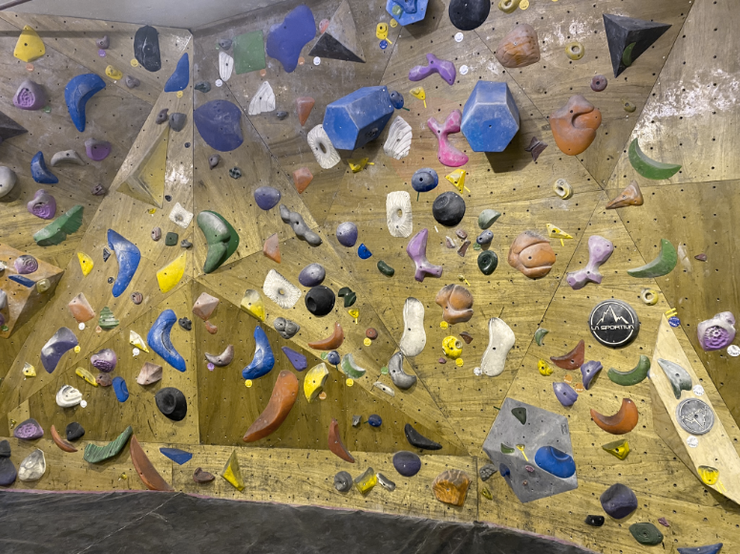


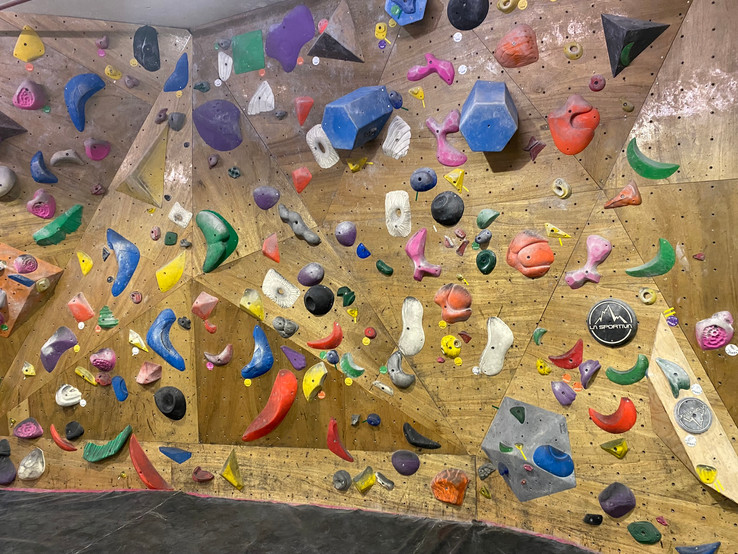
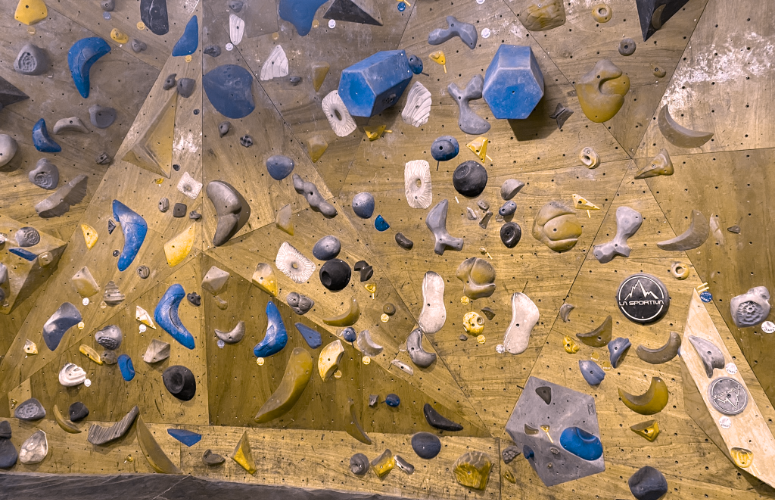
This slideshow stimulates the view of the rock wall to people with protanomaly (red-weak), protanopia (red-blind) and normal vision respectively.
The colour of holds in the images with protanomaly appear faded but distinguishable. However, in the image with protanopia, the pinks, reds, greens, oranges and purples all blend together and are difficult to distinguish.
Green-weak and green-blind view

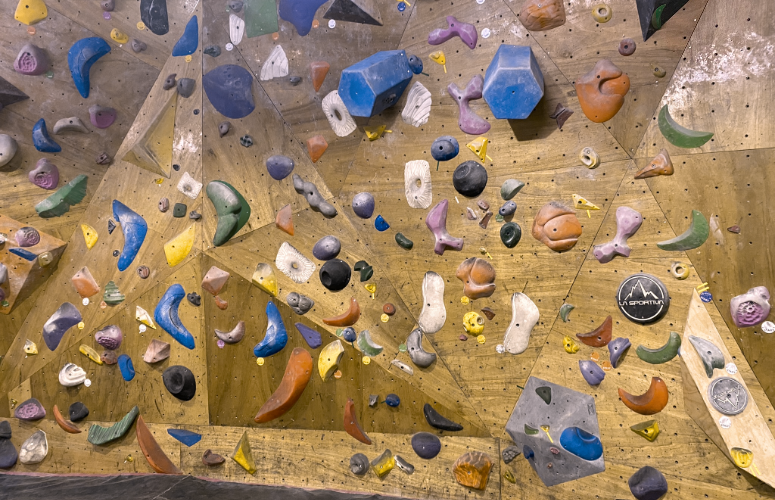


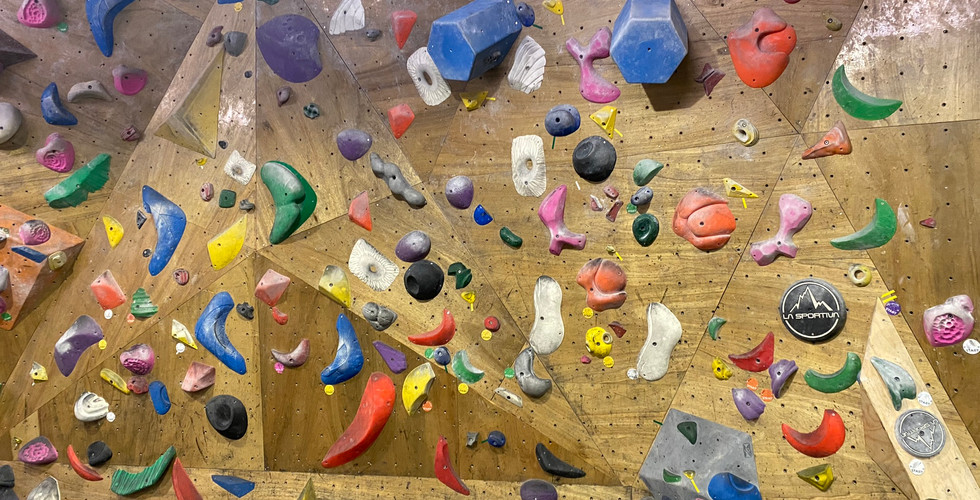
This slideshow stimulates the view of the rock wall to people with deuteranomaly (green-weak), deuteranopia (green-blind) and normal vision respectively.
Similar to protanomaly (red-weak), the colour of holds in the images with deuteranomaly appear faded but still distinguishable. However, in the image with deuteranopia, pink, red, green, orange and purple holds blend together and are difficult to distinguish.
Blue-weak and blue-blind view

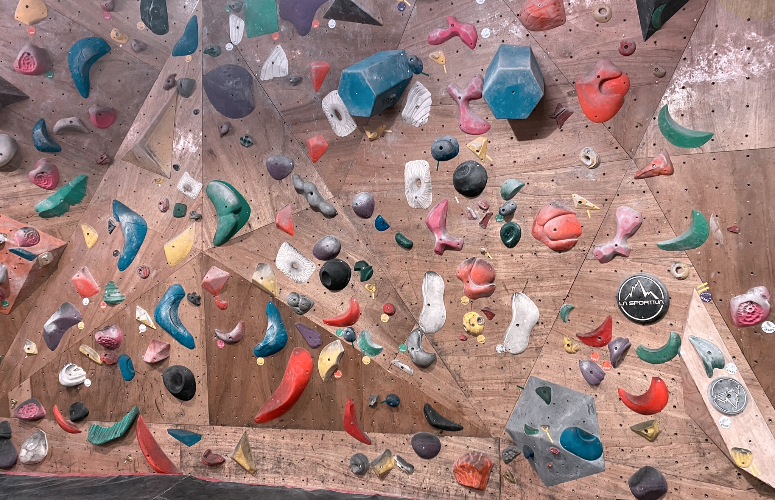

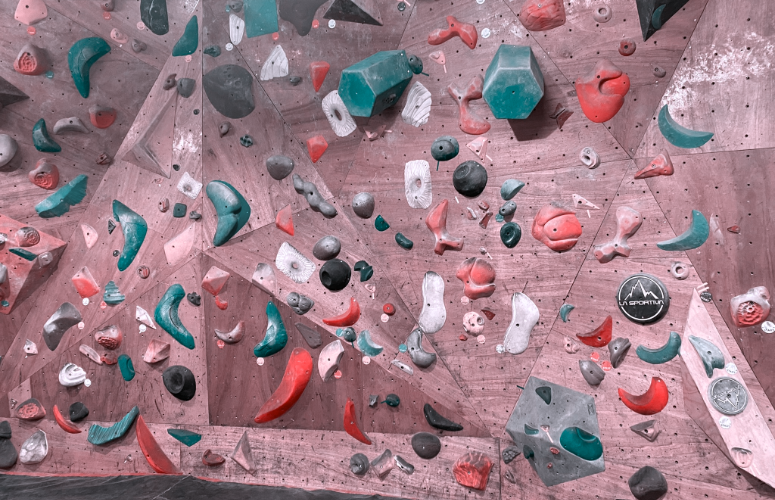
This slideshow stimulates the view of the rock wall to people with tritanomaly (blue-weak), tritanopia (blue-blind) and normal vision respectively.
The colours in the image with tritanomaly seem faded yet still distinguishable. However, in the image with tritanopia, the greens blend with blues while the purples, yellows and oranges lose their colour and become difficult to distinguish.
Monochromatic view

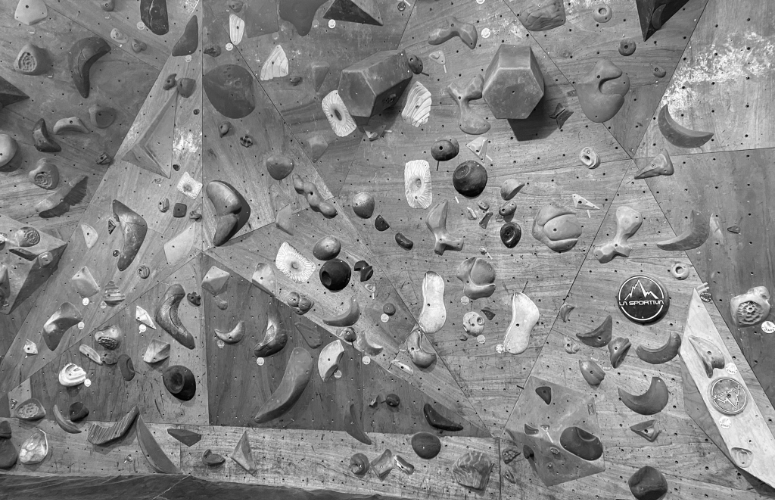
This slideshow stimulates the view of the rock wall to people with achromatopsia (monochromacy) and normal vision respectively.
The holds in this image (the entire view, actually) appear as blacks, greys and whites. The different hues of colours appear as different shades of grey.
From these visuals alone, you can get an idea of what it’s like to boulder while colourblind and the potential difficulties one might face while identifying routes.
The main challenge would be having a hard time identifying holds by their colours, hence a greater difficulty to match bouldering problems.
Additionally, people on online forums have also shared the challenges they face bouldering while colour blind. These include:
Low light, dimly lit gyms
Cannot identify colour-coded grade tag
In fact, many colour blind people find it difficult, but not impossible, to differentiate colours! It boils down to the contrast and hue of the given colours — a bright and well-lit setting enhances contrast and visibility, while dimly lit settings decrease the visibility of colours to colour blind people.
Additionally, colour blindness can also make colour-coded grade tags more difficult!
Now that we have identified the issue, how can we create an inclusive bouldering environment for those who cannot easily differentiate colours?
Recap: Problems
Colour-coded grade tags
Colour-coded routes
Source: color-blindness.com
Step #4: Imagine a Solution
Now is where this turns into a fun little project for me. With the obstacles in mind, I am going to try to create a system, or partial system, that would accommodate the needs of colour blind people in the bouldering gym.
Written grade tags
This may be the easiest solution. As mentioned above, some gyms use different coloured tags to indicate the difficulty of problems, which equals no good if you’re colour blind.
To this regard, we can refer to how bouldering problems are conventionally graded. Bouldering problems are marked according to something called a V-scale and ranges from V0 (easiest) to V17 (hardest).
If colour is the problem, then why include it at all? Here are some monochromatic designs of grade tags that everyone can read.

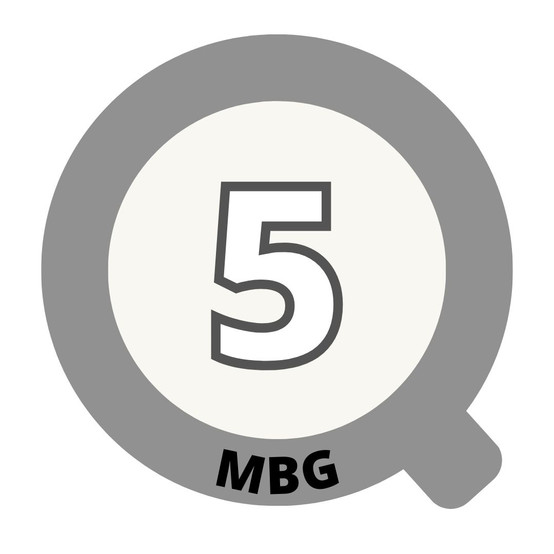

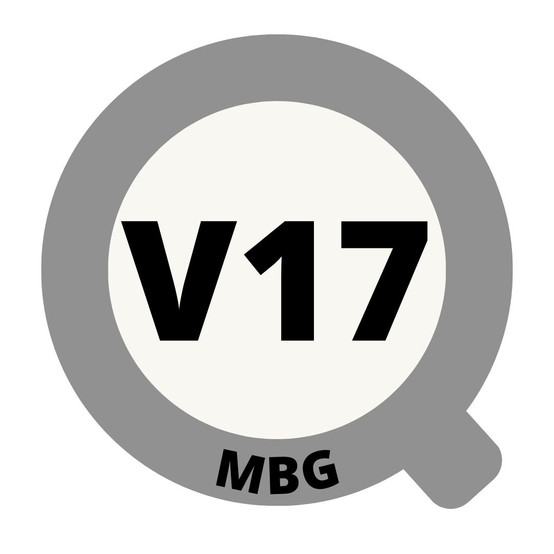

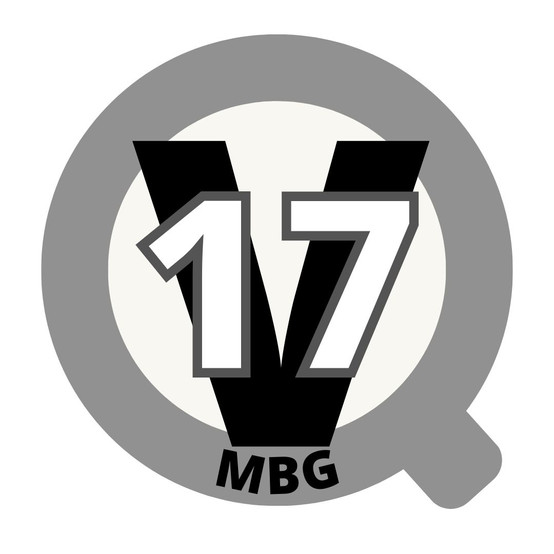

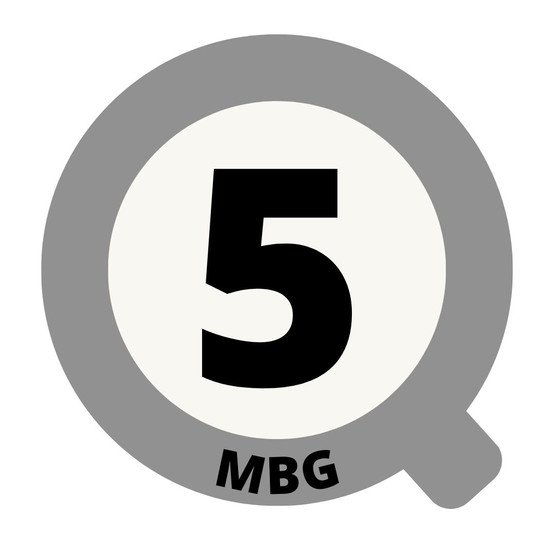
You could even make your own grade system! This completely replaces the role of colour association and any potential confusion. There’s even space for you to add your brand logo! MBG stands for Maison’s bouldering gym (obviously).
Bouldering App
Grade tags are intuitive enough, but having too many of them could make the wall look cluttered and messy.
For my second solution, I’ve created an app called Boulder Plus (B+ for short). In the app, each route would be identified through a QR code; climbers would scan the tag, and the app would identify the holds for a particular route.
This solution is inspired by griptonite, a bouldering software that helps climbers track their climbs.
This is how B+ could work
Climbers scan the QR code on the start tag of a route
B+ will then show the holds that belong to that route
This could be as simple as showing a picture of the wall where the holds are indicated by circles or highlights. This could be configured manually by the route setters.
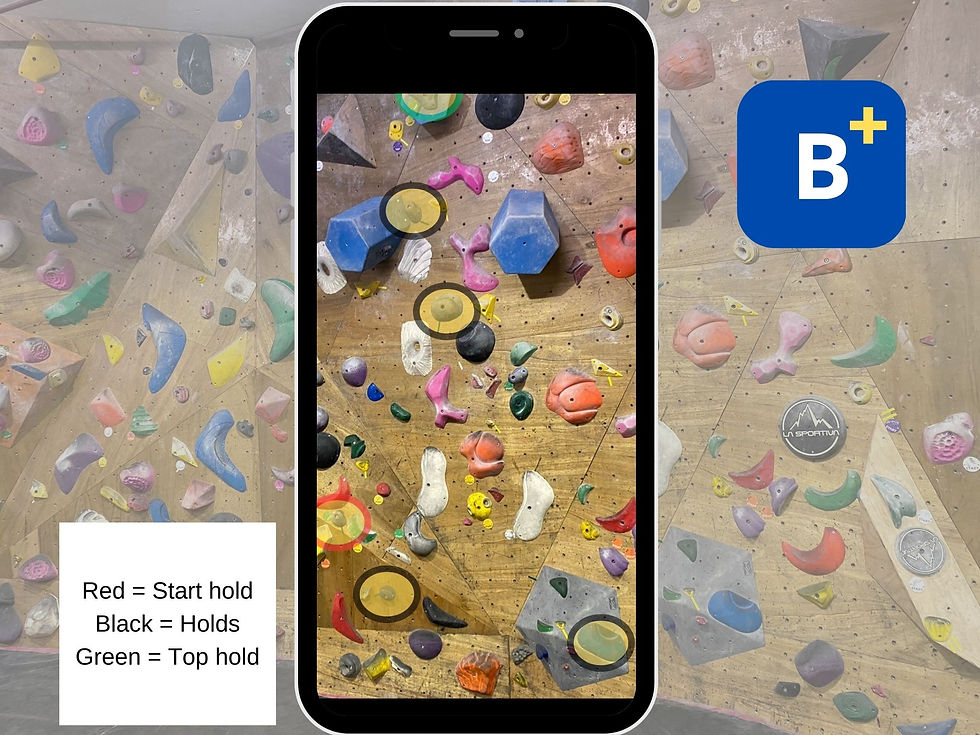
Of course, it wouldn’t be possible (nor encouraged) for climbers to hold their phones while climbing. Nevertheless, B+ could help colour blind climbers identify the right holds and act as a reference for routes.
Source: Sport Rock, griptonite
Step # 5. Create, Test and Improve
The end of the Engineering Design Process is to actually create the solution, test it out and improve it after observation/getting user feedback.
For logistical reasons, I’m not able to test my colour grade tags solution in a real bouldering gym. I also (unsurprisingly) did not create the B+ app, which is a shame.
However, it’s cool to see apps like griptonite having a similar function to the hypothetical B+, with the added function of being able to track climbers’ climb records and whatnot.
Conclusion
That concludes my exercise to address the potential problems that colour blindness could bring to bouldering. I hope that you’ve learnt more about colour blindness, bouldering, the Engineering Design Process or all of the above!
From simple solutions such as written grade tags to more complex ones like B+, there can be many (simple) solutions that could make our world more accessible. From bouldering to, say, climate change, I’m curious to know what solutions we could come up with if we put our heads together!
Beyond that, it’s always fun to look at things from different perspectives and ask thought-provoking questions. Write them down, and who knows — maybe you’ll have the free time to answer some of them!
Stay curious!
Comments